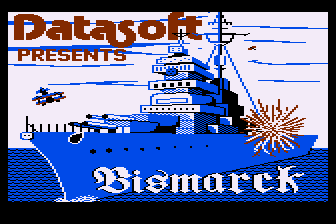
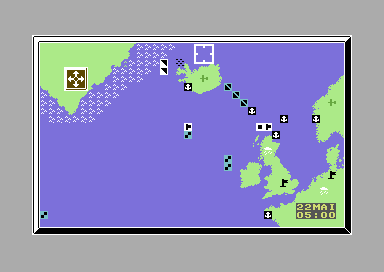
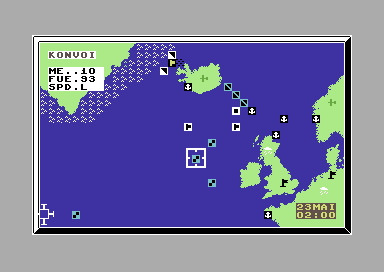
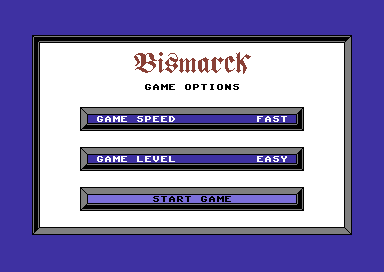
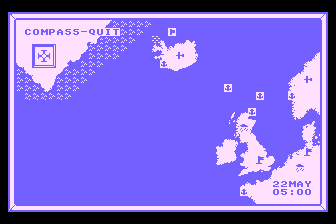
Bismarck is a turn-based strategy game in which players control either the German battleship Bismarck or the Royal Navy fleet, focusing on naval combat during WWII.
Dates de sortie
Amiga1987-01-01
ZX Spectrum1987-01-01
Atari 8-bit1987-01-01
Atari ST1987-01-01
commodore 641987-01-01
Commodore / Amiga1987-01-01
Apple II1987-01-01
Dates de sortie
Amiga1987-01-01
ZX Spectrum1987-01-01
Atari 8-bit1987-01-01
Atari ST1987-01-01
commodore 641987-01-01
Commodore / Amiga1987-01-01
Apple II1987-01-01
Métadonnées
GenresDonnées indisponibles
StudiosPersonal Software Services
MonétisationsDonnées indisponibles
ÉditeursMirrorsoft, Datasoft
ÉtiquettesBismarck, Atari ST, turn-based strategy, Commodore 64, naval warfare, World War II, Amiga, battleship game, historical strategy, retro gaming
Classification du jeuDonnées indisponibles
PlateformesAmiga, ZX Spectrum, Atari 8-bit, Atari ST, commodore 64, Commodore / Amiga, Apple II
BoutiquesDonnées indisponibles
GenresDonnées indisponibles
StudiosPersonal Software Services
MonétisationsDonnées indisponibles
ÉditeursMirrorsoft, Datasoft
ÉtiquettesBismarck, Atari ST, turn-based strategy, Commodore 64, naval warfare, World War II, Amiga, battleship game, historical strategy, retro gaming
Classification du jeuDonnées indisponibles
PlateformesAmiga, ZX Spectrum, Atari 8-bit, Atari ST, commodore 64, Commodore / Amiga, Apple II
Bismarck is a turn-based strategy game in which players control either the German battleship Bismarck or the Royal Navy fleet, focusing on naval combat during WWII.
Personal Software Services (PSS) is a pioneering game development studio founded in the early 1980s, known for its innovative approach to strategy and simulation games. The studio gained recognition with the launch of "Conflict: Europe" in 1985, which set a precedent for tactical gameplay in the genre. Over the years, PSS expanded its portfolio with notable titles such as "Austerlitz," "Bismarck," and "Champion of the Raj," each contributing to the studio's reputation for historical accuracy and engaging mechanics. Key personnel at PSS include founder and lead designer, who has been instrumental in shaping the studio's vision and direction. The creative team has consistently pushed the boundaries of game design, particularly in the realm of turn-based strategy. PSS has significantly influenced the gaming industry by introducing complex gameplay mechanics and detailed historical simulations, paving the way for future strategy games. The studio specializes in strategy and simulation genres, often incorporating rich narratives and intricate systems. Throughout its history, PSS has received various accolades for its contributions to gaming, including recognition for its innovative designs and engaging gameplay experiences, solidifying its place in the annals of video game history.
Personal Software Services (PSS) is a pioneering game development studio founded in the early 1980s, known for its innovative approach to strategy and simulation games. The studio gained recognition with the launch of "Conflict: Europe" in 1985, which set a precedent for tactical gameplay in the genre. Over the years, PSS expanded its portfolio with notable titles such as "Austerlitz," "Bismarck," and "Champion of the Raj," each contributing to the studio's reputation for historical accuracy and engaging mechanics. Key personnel at PSS include founder and lead designer, who has been instrumental in shaping the studio's vision and direction. The creative team has consistently pushed the boundaries of game design, particularly in the realm of turn-based strategy. PSS has significantly influenced the gaming industry by introducing complex gameplay mechanics and detailed historical simulations, paving the way for future strategy games. The studio specializes in strategy and simulation genres, often incorporating rich narratives and intricate systems. Throughout its history, PSS has received various accolades for its contributions to gaming, including recognition for its innovative designs and engaging gameplay experiences, solidifying its place in the annals of video game history.