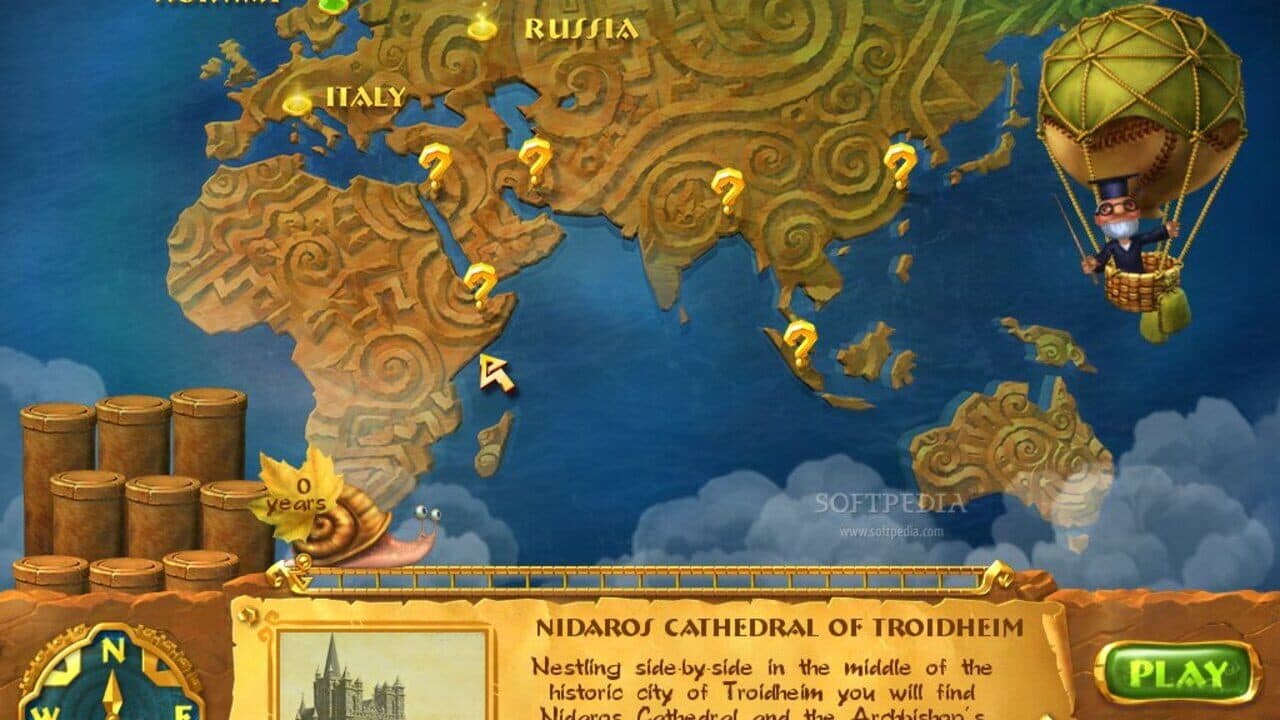
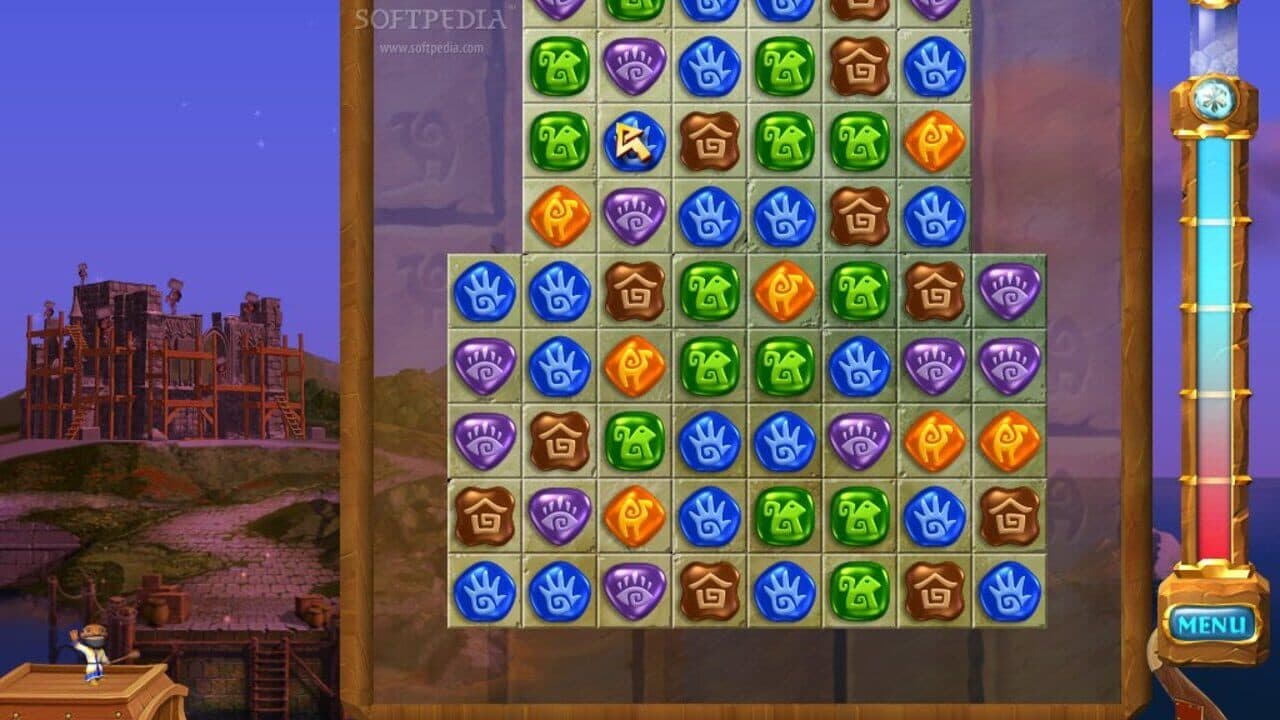
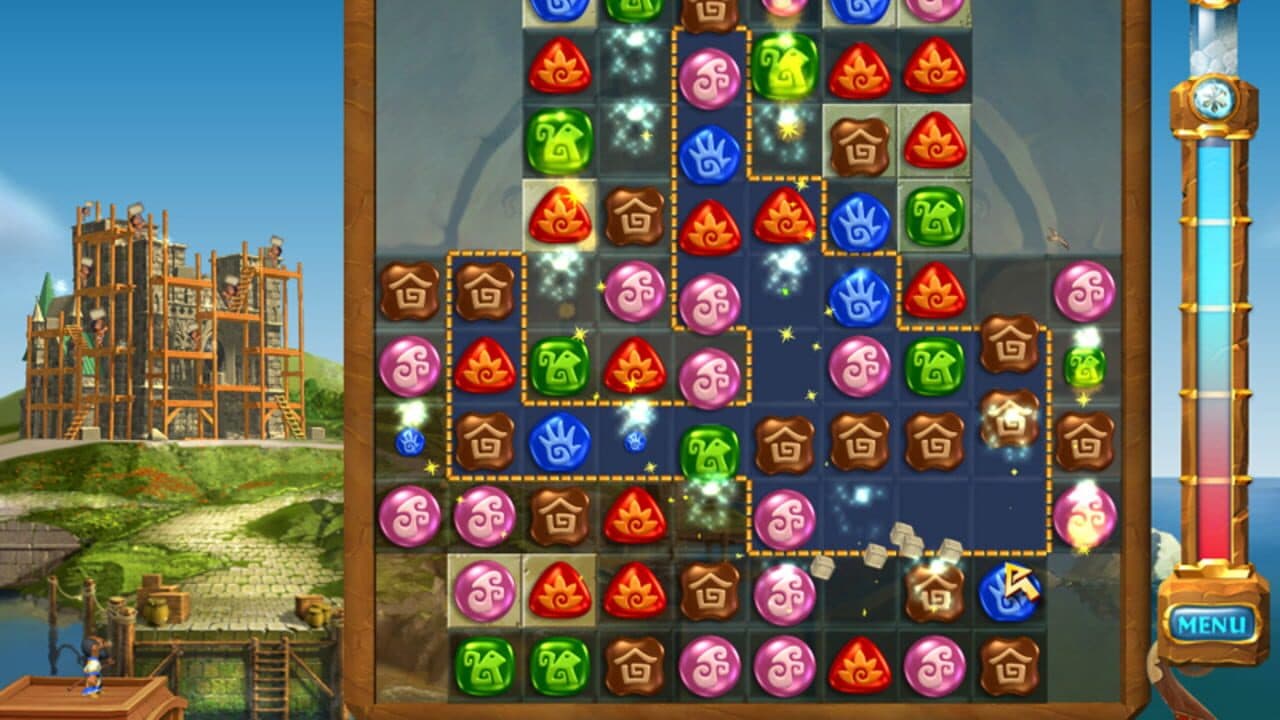
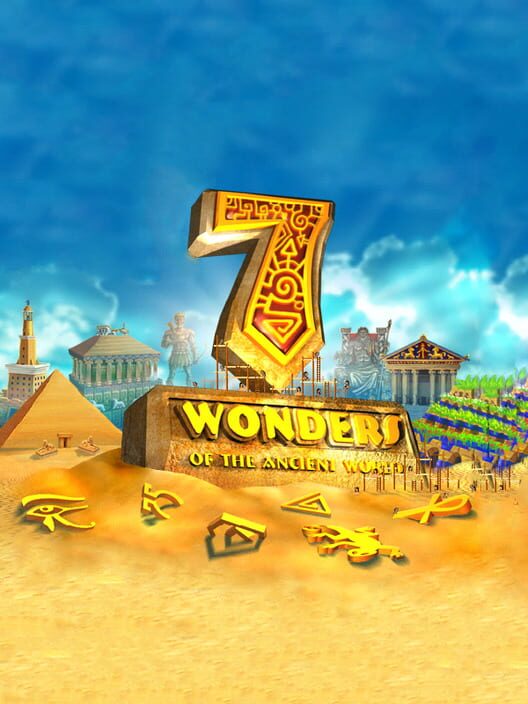
7 Wonders: Treasures of Seven is a casual puzzle game in which players match runes to break blocks, rotate cubes, and uncover historical structures.
Dates de sortie
windows2008-11-14
Nintendo DS2008-11-14
PC2008-11-14
PC (Microsoft Windows)2008-11-14
Classements d'âge
US & CAEveryone
EUPEGI 12
Langues supportées
Audio
Sous-titres
Interface
English
Dates de sortie
windows2008-11-14
Nintendo DS2008-11-14
PC2008-11-14
PC (Microsoft Windows)2008-11-14
Classements d'âge
US & CAEveryone
EUPEGI 12
Langues supportées
Audio
Sous-titres
Interface
English
Liens
Liens
Métadonnées
GenresCasual, Puzzle
StudiosMumboJumbo
ÉditeursAccelerate Games
Étiquettespathway puzzles, puzzle game, point and click, build wonders, casual gaming, innovative gameplay, rotatable board, match runes, hidden city, historical setting, Casual, Match 3, Puzzle
Classification du jeuDonnées indisponibles
Plateformeswindows, Nintendo DS, PC, PC (Microsoft Windows)
Boutiquessteam
GenresCasual, Puzzle
StudiosMumboJumbo
ÉditeursAccelerate Games
Étiquettespathway puzzles, puzzle game, point and click, build wonders, casual gaming, innovative gameplay, rotatable board, match runes, hidden city, historical setting, Casual, Match 3, Puzzle
Classification du jeuDonnées indisponibles
Plateformeswindows, Nintendo DS, PC, PC (Microsoft Windows)
MumboJumbo, founded in January 2001 by Mark Dochtermann and Ron Dimant, emerged as a significant player in the casual gaming sector after departing from Ritual Entertainment. The studio gained prominence in 2003 by partnering with portal sites to distribute downloadable games for Windows and Mac, marking a pivotal moment in the casual gaming landscape. Notably, MumboJumbo acquired Ritual Entertainment in 2007, a controversial move that aimed to leverage the studio's expertise in casual game development, despite skepticism from industry analysts regarding the rationale behind this acquisition. Key figures such as Dochtermann and Dimant have been instrumental in shaping the studio's vision. MumboJumbo is best known for its successful titles, including the "Luxor" series, "Zombie Bowl-o-Rama," and "7 Wonders of the Ancient World," which have collectively contributed to the casual gaming genre's growth. The studio's innovative approach to game design has influenced the industry by popularizing accessible gaming experiences, particularly through match-three mechanics and engaging puzzle elements. MumboJumbo primarily specializes in casual games, focusing on genres such as puzzle and arcade. The studio has received several accolades, including a $4.6 million jury award in 2010 for a breach of contract against PopCap Games, highlighting its legal challenges in the competitive gaming market. However, as of late 2017, the studio's operations appear to have ceased, with its website reduced to a logo, leaving its legacy in the casual gaming industry as a notable chapter in its evolution.